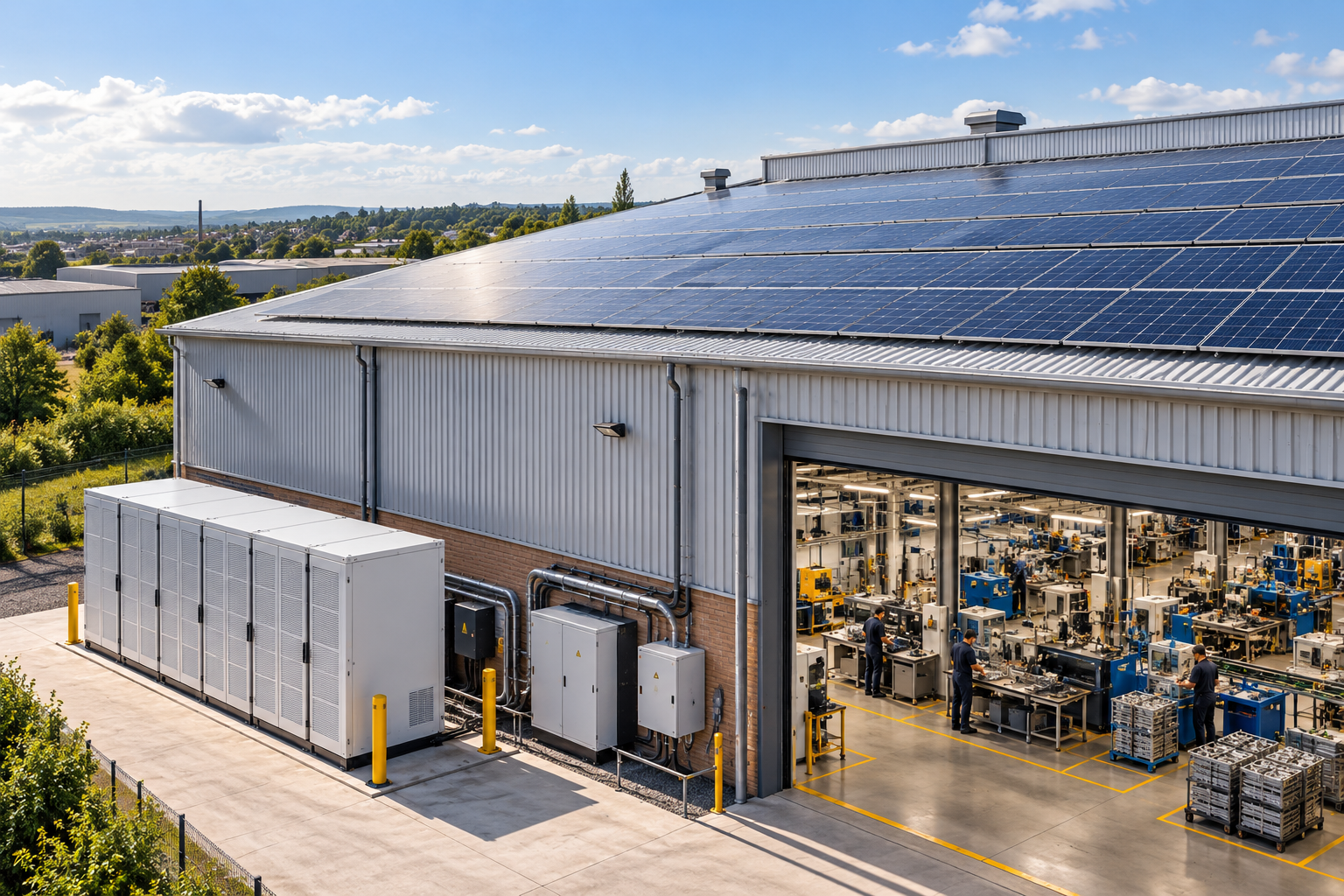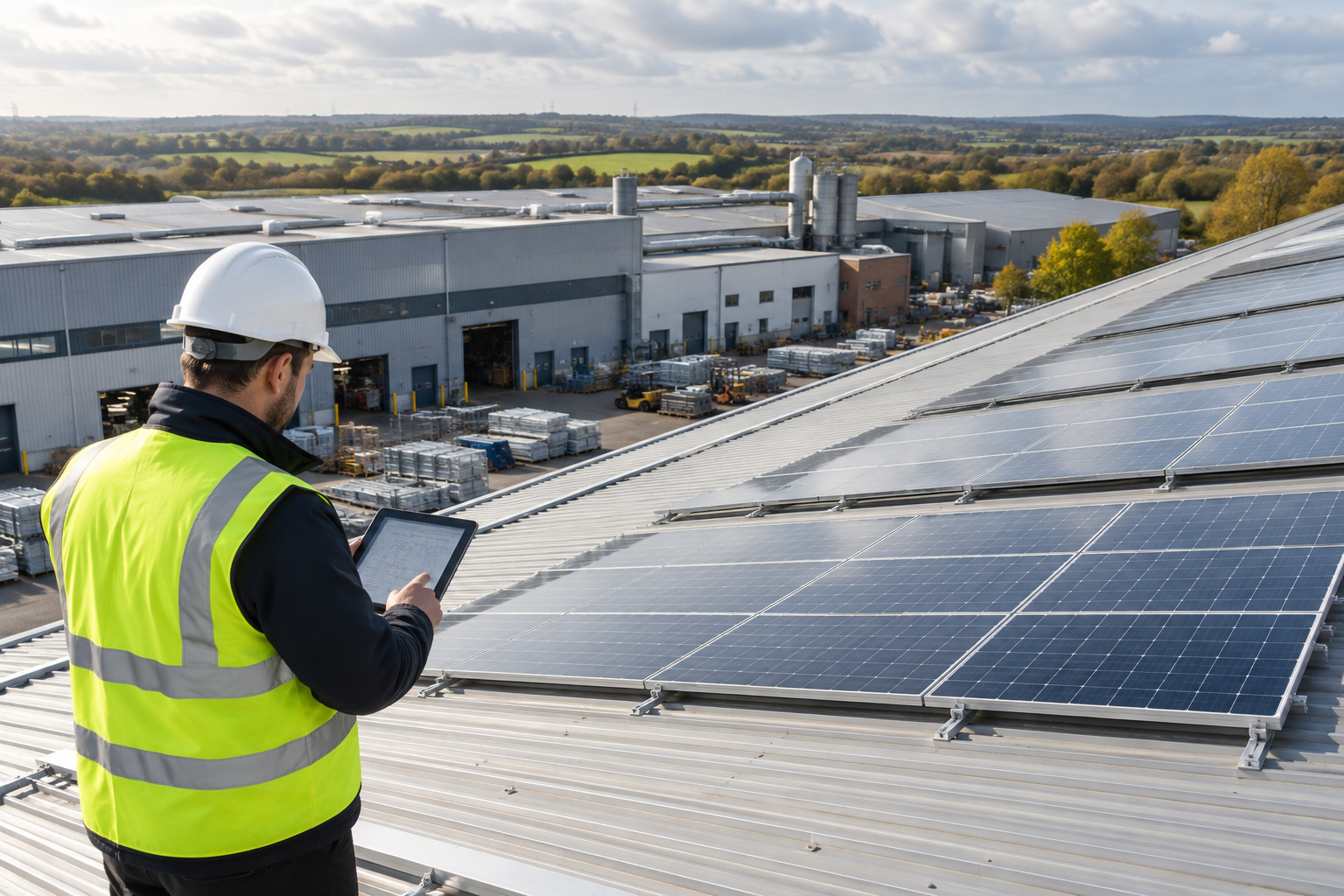
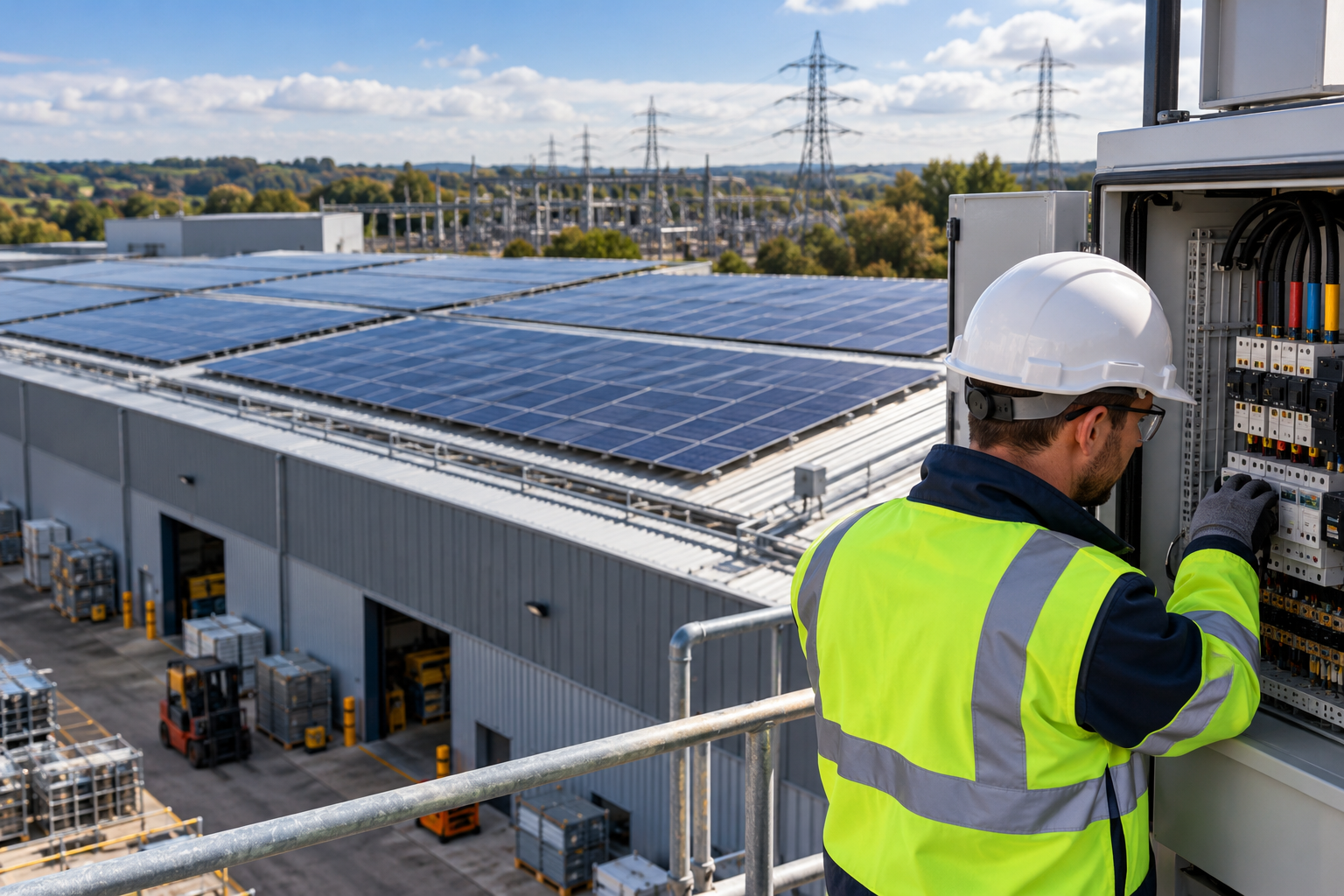
For a UK factory planning a sizeable rooftop solar installation, the grid connection is part of the project—not an administrative detail to leave until the end. The Distribution Network Operator (DNO) needs to understand how new generation could interact with the local electricity network, and the right application route depends on the proposed system and connection.
Early grid work can prevent a technically attractive factory solar scheme from being delayed or redesigned later. This guide explains the practical questions manufacturers should raise with their solar designer at feasibility stage.
What is the DNO?
The DNO operates the regional electricity distribution network that connects your factory to the grid. A rooftop solar system can change the direction and amount of power flowing through that connection, particularly when generation exceeds onsite demand and electricity is exported.
Why grid connection should be considered early
Factory solar is normally designed around roof suitability and the site’s electricity profile, but available network capacity can also influence the final design. Establishing the electrical connection, likely export behaviour and relevant DNO process early gives the project team better information before equipment is ordered or financial assumptions are finalised.
For the wider project sequence, start with our solar panels for factories UK guide and factory roof suitability guide.
Where G99 fits into commercial solar
Engineering Recommendation G99 provides requirements for connecting generation equipment in parallel with public distribution networks. For commercial and industrial projects, the solar designer should establish which connection procedure applies to the proposed installation rather than relying on a domestic-solar rule of thumb.
The exact route can depend on the generation equipment, connection characteristics and network circumstances, so manufacturers should treat project-specific DNO confirmation as part of design due diligence.
What information is useful for a factory solar grid assessment?
- Existing electrical supply and connection details.
- Proposed solar PV capacity and inverter configuration.
- Factory half-hourly consumption data.
- Expected onsite solar self-consumption and potential export.
- Any existing generation or battery storage.
- Planned future loads such as additional production equipment, EV charging or electrified heating.
- Single-line electrical information and site layout where required by the project team.
What if the factory cannot export all its surplus solar?
A network constraint does not automatically mean the solar project must be abandoned. Depending on the site and the DNO’s requirements, the design team may be able to examine options such as adjusting system size, increasing onsite consumption, controlling export or considering storage. These options should be modelled against the commercial case rather than selected simply to maximise installed capacity.
Our guide to surplus solar electricity from a UK factory explains why export assumptions matter. Where storage is being considered, see battery storage for factory solar.
Grid capacity and solar system sizing
The biggest array that physically fits on the roof is not always the best commercial system. Good sizing considers roof area, structural condition, generation profile, factory demand, export value, grid constraints and investment objectives together. For manufacturers with strong daytime loads, matching solar production to consumption can be especially important because electricity used directly onsite displaces grid purchases.
Does battery storage remove the need for DNO work?
No. Adding a battery changes the electrical design but does not mean grid-connection requirements can simply be ignored. Solar, battery controls, import/export behaviour and the site’s connection need to be assessed as an integrated system.
Questions manufacturers should ask before approving a project
- Has our existing electrical connection been reviewed?
- Which DNO connection process is expected to apply?
- Has the proposed solar capacity been checked against our half-hourly demand?
- How much electricity is expected to be used onsite versus exported?
- What happens to the financial model if export is constrained?
- Are any network or connection costs excluded from the proposal?
- Who is responsible for the DNO application and technical information?
- Could planned factory expansion materially change the design?
Frequently asked questions
Do factory solar panels need DNO approval?
Commercial generation connected in parallel with the distribution network must follow the applicable connection requirements. The correct procedure should be confirmed for the specific factory project and proposed equipment.
What is G99 for solar panels?
G99 is an Engineering Recommendation covering the connection of generation equipment to public distribution networks. It is particularly relevant to many larger commercial and industrial generation projects.
Can a factory install solar if export is limited?
Potentially, yes. The appropriate solution is site-specific. A designer may assess system sizing, onsite consumption, export control and other options against the DNO requirements and project economics.
Build the grid connection into the factory solar business case
The strongest factory solar proposals bring roof, electrical demand, grid connection and finance together before final approval. Commercial Solar Systems can assess your factory’s rooftop opportunity and electricity profile as part of a commercial solar proposal. Contact us to discuss your site.