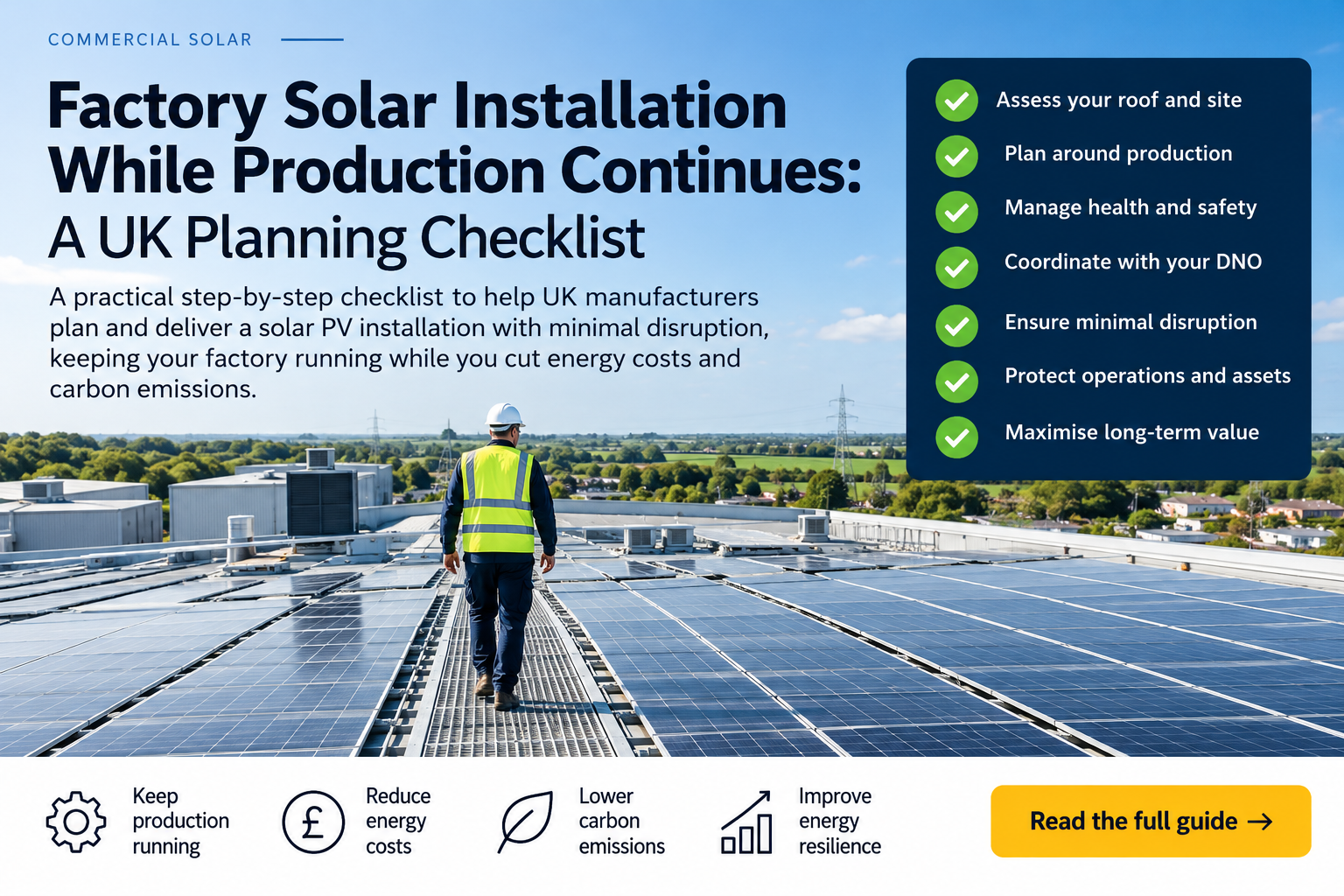
Installing solar panels on a working factory is not simply a roofing project. Production schedules, vehicle movements, roof condition, electrical isolation and contractor access all need to be planned together. A well-managed installation can often be phased around normal operations, but no installer should promise zero disruption before assessing the site.
1. Appoint a single factory project lead
Nominate an operations lead who can coordinate production, maintenance, health and safety, facilities and the solar contractor. Agree who can authorise restricted areas, electrical shutdowns and changes to the programme. Establish a daily briefing and an escalation route for unexpected issues.
2. Survey the roof before booking installation dates
Confirm roof condition, remaining service life, structural loading, asbestos information, fragile surfaces, skylights, access routes and fall protection. A competent structural assessment and appropriate surveys should inform the design. Replacing a failing roof after installing solar is an expensive mistake. See our factory roof suitability guide.
3. Divide the project into manageable work zones
Map installation zones against production lines, loading bays, emergency exits, pedestrian routes and fire access. Separate contractors and deliveries from routine factory traffic. Plan lifting operations and material storage so that they do not obstruct critical operations. Use clearly documented exclusion zones and communication arrangements.
4. Plan electrical work and any shutdowns early
Discuss the proposed connection point, switchgear capacity, protection, metering and commissioning with the electrical contractor and your site engineer. Some works may require an agreed electrical isolation or a planned shutdown. Schedule these during maintenance windows or quieter shifts where practical, and agree contingency arrangements before work begins.
5. Confirm DNO requirements before promising a completion date
Depending on system design and export arrangements, Distribution Network Operator approval or notification may be required. Allow for any network assessment, export limitation requirements and commissioning paperwork. Our DNO and G99 guide explains the questions to ask.
6. Manage CDM and health-and-safety responsibilities
Commercial rooftop solar projects can involve work at height, lifting, electrical hazards and multiple contractors. Identify the applicable Construction (Design and Management) Regulations 2015 duties, appoint competent dutyholders where required, and ensure construction-phase arrangements, method statements and emergency procedures reflect the live factory environment.
7. Protect production from dust, noise and temporary restrictions
Agree noisy-work windows, roof penetration controls, dust protection, internal access restrictions and procedures for unexpected leaks or weather delays. Inform supervisors and affected teams in advance. Keep an agreed route for deliveries, waste removal and emergency vehicles.
8. Commission, hand over and monitor performance
Before handover, check test certificates, electrical labelling, as-built drawings, warranties, monitoring access, maintenance requirements, fire-safety information and any DNO documentation. Agree who responds to inverter alerts and how performance will be reviewed. Solar is a long-term asset, not a project that ends when the scaffolding comes down.
A practical pre-start checklist
- Named operations lead and contractor contacts
- Roof and structural suitability confirmed
- Traffic, lifting and access plans agreed
- Electrical shutdown requirements documented
- DNO position and commissioning pathway confirmed
- CDM duties and safe systems of work agreed
- Production teams briefed on phased works
- Handover documents and monitoring responsibilities defined
Bottom line: The best factory solar installations are designed around the realities of the site. Early coordination between operations, engineering, safety and the installer reduces avoidable disruption and protects the investment. For the wider business case, read our solar for factories guide.
Considering rooftop solar for your manufacturing site? Contact Commercial Solar Systems to discuss a site-specific assessment and installation plan.